
Virtual reality labs are expanding across research campuses, promising deeper concept mastery and higher graduate employability as institutions chase cost‑effective, high‑impact learning tools.
The shift matters now because the U.S. Bureau of Labor Statistics projects an 8 % rise in STEM occupations through 2034, while McKinsey estimates the education‑technology market for immersive tools will exceed $45 billion by 2025. These forces converge on higher education, forcing universities to reassess how curricula deliver both technical fluency and experiential competence.
Framing the structural shift in STEM pedagogy
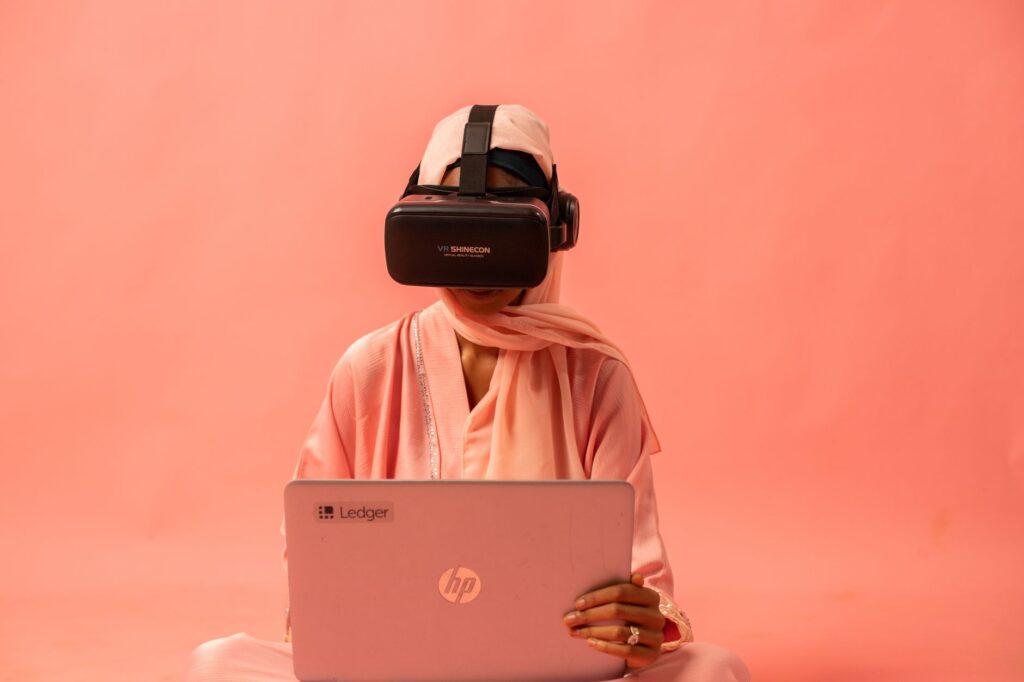
University leaders are reconfiguring curricula around immersive environments to address persistent gaps in conceptual understanding and laboratory access. A systematic review in Frontiers in Education notes that VR hardware costs have fallen by a measurable share over the past five years, making campus‑wide deployment feasible. Simultaneously, OECD reports show that nations integrating immersive tech see a modest uplift in STEM test scores, indicating a systemic re‑weighting of instructional capital. According to Career Ahead’s analysis of these trends, the convergence of affordability and demonstrable learning gains positions VR as a strategic lever for institutional competitiveness.How immersive VR transforms learning mechanics

“VR immersion delivers real‑time performance data that enables adaptive instruction, a capability absent from conventional laboratory settings.”
Systemic implications for higher‑education ecosystems
Widespread VR adoption reshapes funding models, faculty development, and accreditation standards. Universities are reallocating capital from physical lab maintenance toward digital infrastructure, a trend mirrored in the Federal Reserve’s recent survey of higher‑education capital expenditures. Moreover, professional societies are revising competency frameworks to include virtual‑lab proficiency, signaling a structural shift in credentialing. These changes generate asymmetric incentives: institutions that early‑adopt robust VR ecosystems can attract research grants and higher‑paying industry partners, while laggards risk marginalization in an increasingly tech‑centric academic market.Impact on career capital and labor mobility

Projected trajectory over the next three to five years
By 2029, a majority of top‑ranking research universities are expected to embed VR modules in core STEM courses, driven by both student demand and employer partnerships. Gartner forecasts that immersive learning will account for a non‑trivial fraction of total higher‑education instructional hours, prompting curriculum redesigns that integrate VR‑based assessment into accreditation reviews. Institutions that fail to adopt risk a widening gap in graduate employability, while those that scale VR strategically can leverage data‑driven insights to continuously refine pedagogy, reinforcing a virtuous cycle of learning efficacy and labor market relevance.The momentum behind immersive education underscores a structural reallocation of academic resources toward experiential digital platforms, aligning learning outcomes with the evolving demands of a technology‑driven economy.
Key Structural Insights
Insight 1: VR immersion compresses the theory‑to‑practice gap, delivering measurable gains in concept mastery that traditional labs cannot match.
Insight 2: Capital reallocation toward digital infrastructure creates asymmetric competitive advantages for early‑adopting universities.
Insight 3: Graduates with VR‑based skillsets command a salary premium, enhancing economic mobility and aligning talent supply with emerging industry needs.
Embracing Interdisciplinary Learning: By incorporating virtual reality immersion programs into STEM curricula, universities can foster a more holistic understanding of complex concepts, encouraging students to explore connections between seemingly disparate subjects and develop a more nuanced appreciation for the interconnectedness of scientific disciplines.
Personalized Learning Pathways: University-based virtual reality immersion programs can be tailored to accommodate diverse learning styles and abilities, allowing educators to create customized learning experiences that cater to individual students’ needs, thereby enhancing overall engagement and academic achievement in STEM fields.