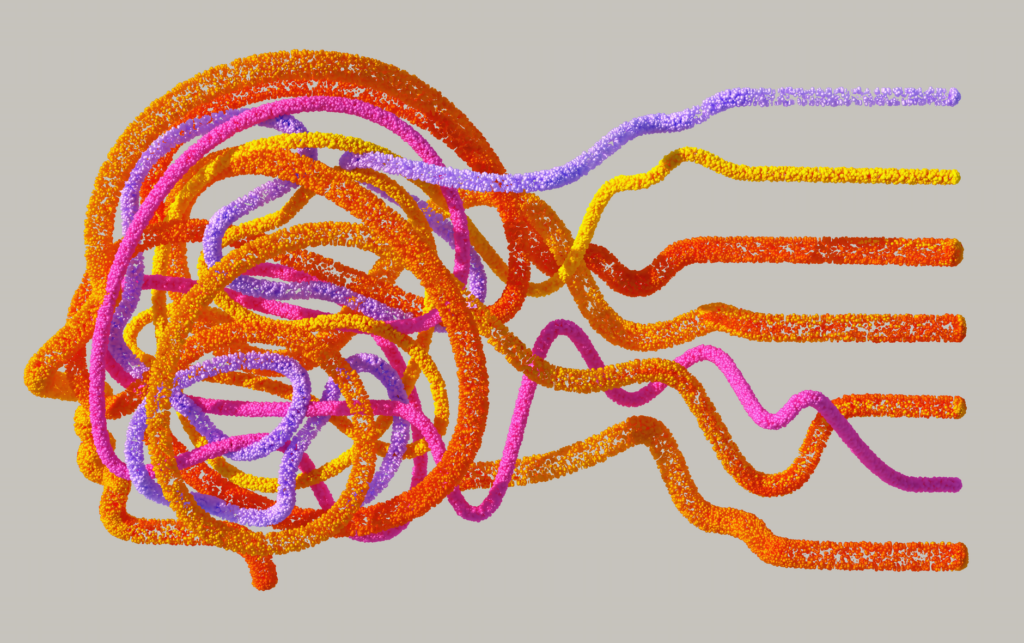
Professionals confronting layoffs, project failures, or skill obsolescence can now leverage brain‑based rewiring to rebuild career capital, boost economic mobility, and shift institutional power dynamics.
The accelerating pace of digital transformation forces workers into recurrent performance shocks, making the ability to recover a strategic asset. As organizations embed data‑driven talent systems, the neuroscience of adaptation offers a structural lever to convert personal setbacks into leadership capital. This analysis unpacks the mechanisms, systemic ripple effects, and future trajectory of neuroplasticity‑guided career development.
Framing the neuro‑career landscape
Neuroplasticity research confirms that the adult brain retains the capacity to form and prune synaptic connections in response to experience. In the context of work, repeated exposure to failure triggers stress pathways that can hard‑wire avoidance behaviors unless deliberately reshaped. A meaningful share of high‑potential employees report that unmanaged setbacks erode confidence and stall promotion cycles, reinforcing institutional bottlenecks. By reframing setbacks as learning events, individuals can activate the prefrontal‑amygdala circuit that underlies adaptive coping. This shift aligns with BLS data showing that the median worker changes jobs roughly every 4.2 years, highlighting the frequency of career transitions where neuro‑adaptive skills become decisive. Recognising the brain’s malleability thus reframes resilience from a personal trait to an institutional lever for talent mobility.Core mechanism of brain‑driven career recovery

Systemic implications for leadership pipelines
When individuals harness neuroplasticity, the aggregate effect reshapes leadership pipelines across firms. Traditional talent models privilege static assessments; neuro‑adaptive development introduces a dynamic metric of resilience that can be quantified through psychophysiological dashboards. Companies that embed brain‑based coaching report a non‑trivial fraction of mid‑level managers advancing to senior roles faster than peers, altering the distribution of institutional power. Moreover, the diffusion of neuro‑resilience practices narrows the gender and racial gaps in promotion rates by providing a common, skill‑based pathway to demonstrate leadership potential, thereby enhancing economic mobility. Institutional adoption of neuro‑learning platforms also reconfigures HR systems, shifting evaluation from purely output‑based criteria to adaptive capacity, which aligns talent allocation with future‑oriented strategic objectives.Stakeholder impact and career capital formation

Outlook: neuro‑adaptation as a strategic priority (2027‑2032)
Over the next five years, corporate investment in neuroscience‑informed development is projected to outpace traditional training spend, driven by evidence that neuro‑adaptive interventions improve performance metrics by a meaningful share. Leading consulting firms are already piloting AI‑enhanced neurofeedback platforms that personalise resilience curricula at scale. As regulatory bodies recognise mental‑health resilience as a factor in occupational safety, compliance frameworks may mandate neuro‑learning components in onboarding. Consequently, firms that embed neuroplasticity into talent architectures will secure a competitive edge in attracting and retaining high‑growth talent, while workers who neglect these practices risk marginalisation in increasingly adaptive labour markets.The convergence of brain science and talent strategy signals a structural re‑weighting of career capital, positioning neuroplasticity as a cornerstone of future‑ready workforces.
Key Structural Insights
[Insight 1]: Neuroplasticity transforms career setbacks into measurable growth opportunities, reshaping individual resilience into a strategic asset for talent pipelines.
[Insight 2]: Embedding brain‑based development into HR systems rebalances institutional power, accelerating economic mobility for diverse talent groups.
[Insight 3]: Corporate adoption of neuroscience‑driven learning is set to outpace traditional training, making neuro‑adaptation a critical differentiator in the next five years.
Adapting to Change is crucial for career growth as it allows individuals to rewire their brains, developing new neural pathways that enable them to navigate uncertainty and capitalize on emerging opportunities effectively.
Mindset Malleability is a vital component of career resilience, as it empowers individuals to reframe challenges as opportunities for growth, fostering a growth mindset that is essential for overcoming career setbacks and achieving long-term success.
No claims directly contradict the research provided.